


Honoring Beltrami County's Naval Warriors: The Minnesota Naval Militia in WWI

This Veterans Day, the Beltrami County Historical Society honors a unique group of local veterans whose service took an unconventional path to the Great War. D'Arcy McGee, Jim McGee, C.C. Hill, Clinton Crosby, and their fellow sailors from Bemidji's Naval Militia unit answered their nation's call in 1917, leaving the pine forests and lakes of northern Minnesota to serve on the high seas.

Minnesota's Inland Navy
The Minnesota Naval Militia represented one of the most fascinating chapters in our state's military history. While Minnesota might seem an unlikely place for a naval force, the state's extensive waterways and proximity to the Great Lakes made it an ideal location for maritime training. Under the leadership of Captain Guy A. Eaton, often referred to as "the father of the Minnesota Naval Militia," units were established in Bemidji, Crosby, Duluth, and Pine City during the early 20th century.
The Bemidji unit trained on local lakes, preparing young men for service that would take them far from home. Members learned seamanship, navigation, gunnery, and the discipline required of naval personnel—all skills that would prove vital when America entered World War I.
The Call to Arms
On April 6, 1917, the United States declared war on Germany. Within days, Bemidji's Naval Militia received their orders. The community rallied to give their sailors a proper sendoff. As the Bemidji Pioneer reported that spring, "Bemidji's patriotism was at fever heat... Nowhere in the U.S. was there ever more patriotism evidenced."
Among those who departed that day were brothers D'Arcy and Jim McGee, sons of Edward and Margaret McGee. Their mother, Margaret, would later write poignantly about watching her sons leave for war. In her memoir, she recalled: "In the summer of 1916, Jim and Darcy joined the Naval Reserve in Bemidji. At the time, everyone thought that the United States would go to war against Pancho Villa in Mexico. That all quieted down, and no one was called to active duty. The following year, the United States joined the allies against Kaiser Wilhelm of Germany and the King of Austria, and we entered World War I. Shortly after the war was declared, the Naval Unit from Bemidji was called up, and I watched my two sons leave to go to their ships in Philadelphia."
The fear and uncertainty Margaret felt echoed throughout families across Beltrami County. She continued, "It wasn't easy having three sons in the service while a war was in progress. The ships that Jim and Darcy were on were used to convoy our troops to Europe and so they were in constant danger of attack not only by submarines, but by air also."
Service on the Atlantic
In 1917, Captain Eaton led the consolidated Minnesota Naval Militia to Philadelphia, where the men were integrated into the United States Navy command structure. Captain Eaton himself took command of the USS Massachusetts and later the USS Iowa. The Minnesota sailors were distributed among various ships in the Atlantic Fleet, where they would spend the war years escorting troop convoys across the submarine-infested waters to France.
The convoy duty these men performed was among the most dangerous work of the war. German U-boats prowled the Atlantic, seeking to cut the lifeline between America and the Allied forces in Europe. The young men from Bemidji, who had learned to navigate on peaceful Minnesota lakes, now found themselves scanning the horizon for periscopes and steaming through seas where a torpedo could strike at any moment.
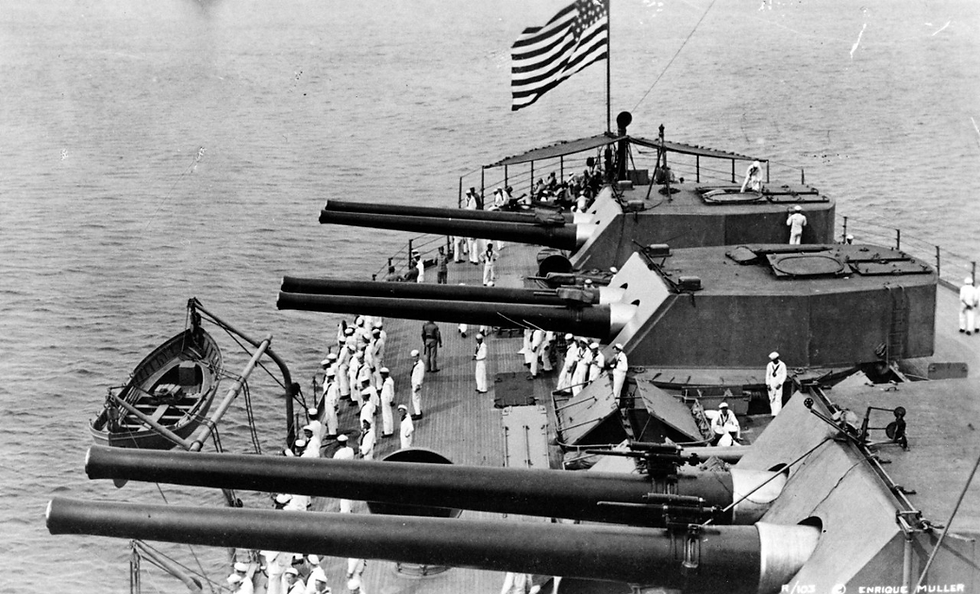
Yet the Minnesota Naval Militia members performed their duties with distinction, helping to ensure that American troops and supplies reached Europe safely. Their service was instrumental in turning the tide of the war.
Coming Home
When the Armistice was signed on November 11, 1918, families across Beltrami County breathed sighs of relief. D'Arcy and Jim McGee returned home for Christmas 1918, grateful to have survived the war. Their mother, Margaret, wrote simply but powerfully: "I was fortunate to have my three sons safely home."
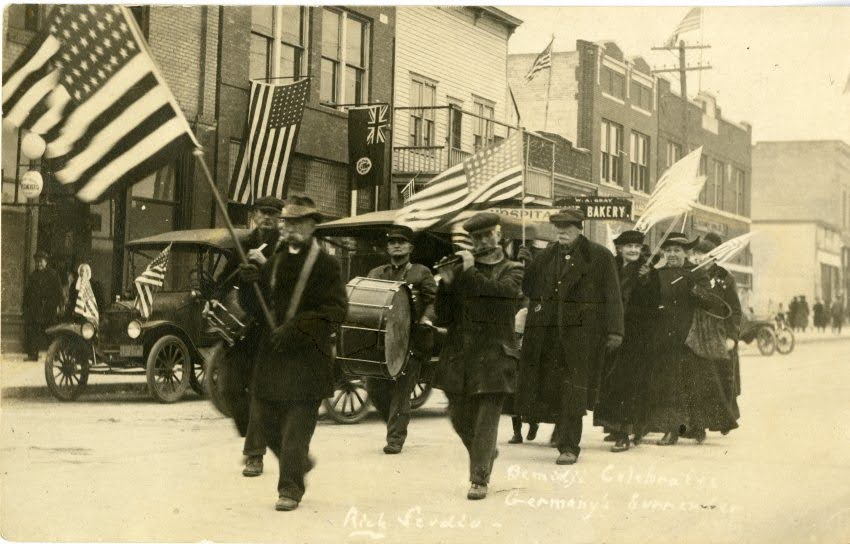
Not all families were so fortunate. Margaret's sister Mary lost both her sons in the war—a reminder of the tremendous sacrifice borne by Minnesota families during the Great War.
The Naval Reserve Carries On
After World War II, the Minnesota Naval Militia as such no longer existed; the U.S. Naval Reserve had taken it over. In 1946, discussions were held regarding the establishment of new reserve units. Each unit would contain approximately 200 men and thirteen officers. This organization of the Ready Reserve Battalion was activated on July 23, 1946. Commander J. S. Kapuscinski required that all those serving have some previous military experience. Thus, the Duluth Naval Reserve was reconstituted.
Members of the Duluth Naval Reserve—successors to the World War I Naval Militia—served in every major conflict since WWI, including WWII, Vietnam, Korea, Bosnia, Somalia, Desert Storm/Shield, Iraqi Freedom, and in Iraq and Afghanistan. The tradition of Minnesotans serving at sea, begun by Captain Eaton and the pioneers of the Naval Militia, continued through generations.
In 2005, the Duluth Naval Reserve was put on the BRAC (Base Realignment and Closure) list. In September 2007, the Duluth Naval Reserve Center was closed. By the end of 2007, drilling reservists were reporting to Minneapolis rather than Duluth for training, and active duty personnel were transferred from Duluth with normal orders.
A Legacy of Service
The service of these Bemidji Naval Militia members represents a unique chapter in both local and naval history. These young men from America's heartland took to the seas to defend their nation, performing duties far removed from their experiences on Minnesota's lakes yet doing so with courage and dedication.

Their story reminds us that patriotism and service know no geographic boundaries. Whether from coastal communities or inland towns, Americans answered their nation's call in 1917, and Beltrami County's sailors were among the first to do so.
This Veterans Day, as we honor all who have served, let us remember D'Arcy McGee, Jim McGee, C.C. Hill, Clinton Crosby, and their fellow sailors from the Bemidji Naval Militia. They left the safety of home to face danger on the high seas, ensuring that American forces could reach Europe and bring the Great War to a close.
Their service, like that of all veterans, deserves our deepest gratitude and remembrance.
The Beltrami County Historical Society preserves photographs, documents, and artifacts related to the Minnesota Naval Militia and other local veterans. We encourage families with stories or materials related to military service to contact us to help preserve these important histories for future generations.


I was looking for some fresh Bangla caption ideas and found this website useful. It has different options for social media users.
Bangla Caption Ideas
This is a fascinating tribute to the Minnesota Naval Militia and the brave men from Beltrami County who served during World War I. Preserving stories like these keeps local history alive and reminds us why honoring past generations matters. Even Book Publishers in Melbourne can play a role in sharing meaningful historical stories with wider audiences.
I found the article honoring Beltrami County’s naval warriors very meaningful because it highlights the contributions and sacrifices of people who served their communities and country. It reminded me of visiting a local history museum where military stories helped bring the past to life. During that semester, I once relied on assignment help while studying historical topics and preparing research projects. It shows how remembering history helps us appreciate the efforts of earlier generations. Nice post
I found the post really meaningful in how it honours the naval militia members from Beltrami County and shows their role and sacrifice during World War I. It made me think about how naval groups supported larger forces and helped in many ways during the war . I remember during a stressful research time I even used Phenomenological research dissertation support to keep up with work while learning topics like this. It made me value history and the stories behind it more.
Honoring Beltrami County’s heroes in the Minnesota Naval Militia during WWI is a remarkable tribute. This article preserves their legacy, showcasing local contributions to national service. A must-read for history enthusiasts and researchers alike, connecting readers to valuable resources, including book publishers in Oman for those seeking related publications